Differences Between Direct Square Forming Tube Mill and Round-to-Square Pipe Mill: A Comparative Overview

1. Characteristics of the Direct Square Forming Tube Mill
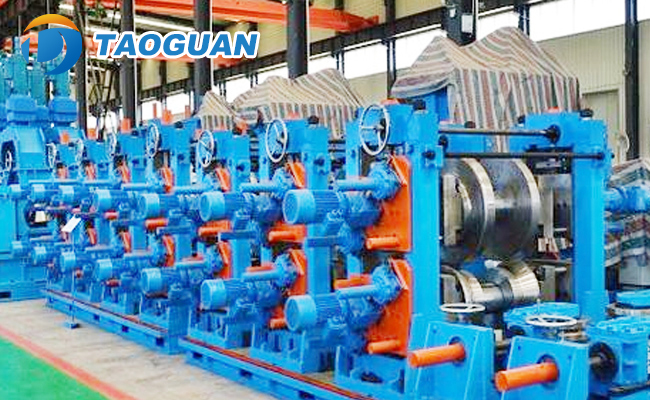
The Direct Square Forming Tube Mill is a specialized machine that forms steel strips directly into square or rectangular tubes through cold roll forming. This technology bypasses the traditional “round-to-square” process, creating the desired shape in a single, efficient step.
Key Features:
Direct Forming Process: This method forms steel strips into square or rectangular tubes directly, eliminating the need for a round tube stage, which simplifies the process and enhances efficiency.
High Material Utilization: The direct forming process minimizes material waste, leading to higher material utilization and reduced production costs.
High Precision: Direct forming ensures more accurate, consistent edges and corners, producing tubes with sharper angles and better-defined shapes.
Ideal for Mass Production: It’s well-suited for high-volume production, enabling continuous manufacturing and enhancing overall line capacity.
Applications:
The Direct Square Forming Tube Mill is commonly used in industries that require high-quality square and rectangular tubes, such as construction, machinery, and furniture manufacturing, where consistency and precision are essential.
2. Characteristics of the Round-to-Square Pipe Mill

The Round-to-Square Pipe Mill transforms steel strips into round tubes first, which are then shaped into square or rectangular tubes through a series of shaping rollers. This traditional method remains widely used in pipe manufacturing.
Key Features:
Versatile Application: This process can produce a wide range of sizes and shapes, making it versatile and adaptable for various specifications.
Flexible Production: The machine can handle multiple sizes on the same production line, making it ideal for operations with diverse product requirements.
Lower Equipment Investment: The Round-to-Square Pipe Mill has a relatively simpler setup, often making it a cost-effective choice for smaller or mid-sized operations.
Applications:
This forming method is suited for industries that produce square and rectangular tubes in varying sizes or small batches, where flexibility is key. It’s widely used for building construction materials and engineered metal products.
3. Comparison Between Direct Square Forming and Round-to-Square Methods
| Comparison Factors | Direct Square Forming Tube Mill | Round-to-Square Pipe Mill |
|---|---|---|
| Forming Steps | Directly forms square/rectangular shapes | Forms round tubes, then reshapes to square/rectangular |
| Production Efficiency | High, suited for large-scale production | Lower, ideal for smaller, multi-spec production |
| Material Utilization | Higher, reducing waste | Lower, with potential for more material waste |
| Precision | High, with sharper corners and edges | Lower, suited for less precise applications |
| Production Flexibility | Lower, optimized for standardized shapes | Higher, suitable for varied shapes and sizes |
| Equipment Cost | Higher, with more complex components | Lower, more economical for smaller setups |
| Application Fields | High-volume construction, machinery, furniture | Flexible batch production, building, engineering |
4. Summary and Recommendations
Both the Direct Square Forming Tube Mill and Round-to-Square Pipe Mill offer unique advantages. When choosing a forming method, companies should consider production volume, product requirements, and market needs:
Direct Square Forming Tube Mill: This method is ideal for large-scale production requiring high precision and consistency, such as in construction and machinery manufacturing where quality and uniformity are prioritized.
Round-to-Square Pipe Mill: Suitable for businesses with varied specifications and lower-volume orders, this method is particularly beneficial for small to medium-sized manufacturers, offering flexibility and cost-efficiency.
Selecting the right forming method can boost productivity, reduce costs, and better meet market demands. By understanding the advantages and limitations of each approach, companies can make the most informed choice for their production needs.